题 目:Prediction and Mitigation of Airframe Noise, Jets and Propellers
报告人:Matthias Meinke RWTH Aachen University
时间:2026 年10 月19 日星期一上午10:30
地点:上海大学延长校区力学所200 学术报告厅
专家简介
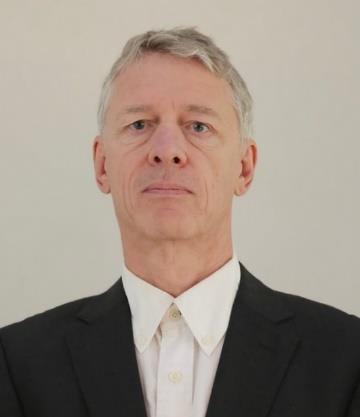
Dr. Matthias Meinke earned his Diploma in Aerospace Engineering from RWTH Aachen University, Germany. Following this, he joined the Institute of Aerodynamics at RWTH Aachen University as a research assistant under the guidance of Prof. E. Krause. In 1993, he completed his Ph.D., presenting a dissertation focused on the Numerical Solution of the Navier-Stokes Equations for Unsteady Flows using the Multigrid Method. Afterward, Dr. Meinke took on the role of head of the CFD department at the Institute of Aerodynamics and began teaching Computational Fluid Dynamics in both Bachelor's and Master's programs at RWTH Aachen University. He has extensive experience in various fields including aerodynamics, turbulence, aeroacoustics, turbomachinery, multiphase flows, and the development of advanced numerical methods. For many years, Dr. Meinke and his team have been developing a multiphysics software framework specifically designed for high-performance computing systems. This framework is utilized in numerous national and European projects. To date, he has published more than 190 peer-reviewed journal articles, his h-index is 45.
Matthias Meinke 博士毕业于德国亚琛工业大学(RWTH Aachen University),获得航空航天工程专业的Diplom学位(德国传统高等教育体系中的大学文凭学位)。随后,他加入亚琛工业大学空气动力学研究所,在 E. Krause教授的指导下担任科研助理。1993年,Meinke 博士获得博士学位,其博士学位论文主要研究利用多重网格方法求解非定常流动的 Navier–Stokes 方程。此后,Meinke 博士担任亚琛工业大学空气动力学研究所计算流体力学(CFD)部门负责人,并开始为该校本科生和硕士研究生讲授计算流体力学课程。Meinke 博士在多个研究领域具有丰富的经验,涵盖空气动力学、湍流、气动声学、涡轮机械、多相流以及先进数值方法的开发等方向。多年来,Meinke 博士及其研究团队一直致力于开发专门面向高性能计算(HPC)系统的多物理场软件框架。该框架已应用于众多德国国家级及欧洲科研项目。截至目前,Meinke 博士已发表190余篇经过同行评审的期刊论文,其 h 指数(H-index)为45。
摘要信息
Several aeroacoustic applications of airframe and jet noise will be presented. A hybrid CFD–CAA method is employed to predict jet noise from chevron nozzles and is combined with a multi-objective Bayesian shape optimization strategy to reduce the far-field overall sound pressure level. The acoustic near field is predicted by coupling the CFD solution to the CAA method, while the acoustic far field is obtained using the Ffowcs Williams–Hawkings (FWH) equation. Highly resolved aeroacoustic simulations of jet noise from a chevron nozzle at a Reynolds number of 10⁶ are first discussed. The predicted noise spectra show good agreement with reference data over a wide frequency range, and the sound pressure levels are insensitive to the chosen location of the FWH surface. Subsequently, a simulation setup with medium mesh resolution and a parametrized chevron nozzle geometry is used for shape optimization. Since the simulations are based on hierarchical Cartesian grids with automatic mesh generation, the aeroacoustic workflow for predicting the sound field can be fully automated and integrated into an optimization loop. This enables chevron nozzle shape optimization for simultaneous noise reduction and thrust-loss minimization. The results demonstrate the viability of the proposed approach for multi-objective shape optimization, allowing the competing objectives of noise reduction and minimal thrust loss to be balanced.
The second application focuses on propeller noise generated by distributed propulsion systems. Such systems represent a promising solution for future Urban Air Mobility (UAM) aircraft, offering potential benefits such as noise reduction, improved efficiency, and enhanced maneuverability. Recent studies have shown that propeller phase synchronization is an effective active control strategy for mitigating noise in distributed propeller configurations with small installation clearances. To further investigate the mechanisms underlying noise reduction through phase synchronization, large-eddy simulations with adaptive mesh refinement are conducted for co- and counter-rotating propeller pairs with relative phase angles of 0° and 90°. The far-field noise signals are predicted from the LES flow field using a time-domain formulation of the FWH analogy. The results show good agreement with wind-tunnel measurements in terms of noise spectra and directivity patterns. The findings indicate that synchronized propellers with a relative phase angle of 90° achieve noise reductions of more than 20dB at the blade-passing frequency in all directions. In addition, the acoustic signals of two isolated propellers are superimposed and compared with those of the dual-propeller configurations. The observed tonal noise reduction is attributed to two main mechanisms: first, reduced aerodynamic interaction at the propeller tips, which mitigates unsteady loading noise propagating in the streamwise direction; and second, destructive acoustic interference between neighboring propellers operating in counter-phase. Further research on noise mitigation applications can be presented if time permits.
本次报告将介绍机体噪声与喷流噪声领域的若干气动声学应用研究。首先,采用计算流体力学与计算气动声学相结合的混合方法(CFD–CAA),预测锯齿形喷口(ChevronNozzle)产生的喷流噪声,并结合多目标贝叶斯形状优化策略,以降低远场总声压级。通过将CFD计算结果与CAA方法耦合,预测声学近场;同时,利用Ffowcs Williams–Hawkings(FWH)方程计算声学远场。首先,讨论雷诺数为10⁶时锯齿形喷口喷流噪声的高分辨率气动声学数值模拟。预测得到的噪声频谱在较宽频率范围内与参考数据吻合良好,且计算得到的声压级对FWH积分面的选取位置不敏感。随后,采用中等网格分辨率的数值模拟设置,并引入参数化的锯齿形喷口几何模型,开展喷口形状优化研究。由于数值模拟基于支持自动网格生成的层次化笛卡尔网格,因此可实现声场预测气动声学计算流程的完全自动化,并将其集成至优化迭代循环中。这使得锯齿形喷口能够在降低噪声的同时,尽可能减小推力损失。研究结果验证了所提出方法在多目标形状优化中的可行性,能够有效权衡噪声降低与推力损失最小化这两个相互竞争的优化目标。
第二项应用主要研究分布式推进系统产生的螺旋桨噪声。此类推进系统被认为是未来城市空中交通(Urban Air Mobility,UAM)飞行器的一种具有发展前景的技术方案,在降低噪声、提高效率以及增强机动性等方面具有潜在优势。近期研究表明,对于安装间距较小的分布式螺旋桨构型,螺旋桨相位同步是一种有效的主动噪声控制策略。为了进一步揭示通过相位同步实现噪声降低的内在机制,研究采用结合自适应网格加密技术(Adaptive Mesh Refinement,AMR)的大涡模拟(LES),对相对相位角分别为0°和90°的同向旋转及反向旋转螺旋桨对进行数值模拟。基于LES计算得到的流场,采用FWH声学类比的时域公式预测远场噪声信号。数值预测结果在噪声频谱和声辐射指向性方面均与风洞实验测量结果吻合良好。研究结果表明,当同步运行的螺旋桨之间的相对相位角为90°时,在所有观测方向上,叶片通过频率(Blade-Passing Frequency,BPF)处的噪声均可降低20 dB以上。此外,研究还将两个孤立螺旋桨产生的声学信号进行叠加,并与双螺旋桨构型的声学结果进行比较。研究发现,所观察到的纯音噪声降低主要归因于两种机制:第一,螺旋桨叶尖附近的气动相互作用减弱,从而抑制沿主流方向传播的非定常载荷噪声;第二,以反相状态运行的相邻螺旋桨之间发生破坏性声学干涉,即声波之间的相消干涉,从而进一步降低噪声。